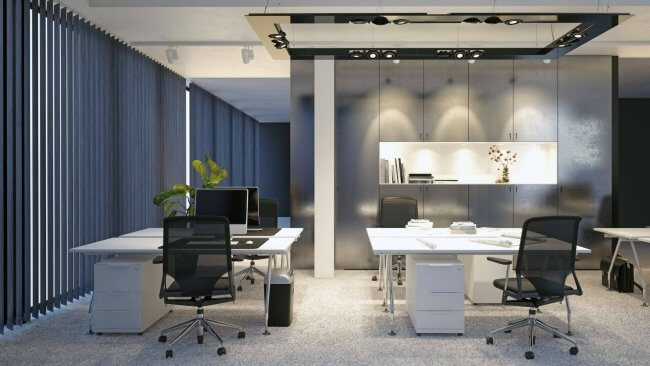
Rapid changes are being observed in the business world in 2025. These changes naturally influence office design trends as well. Traditional desk and chair combinations are being replaced by more flexible, comfortable, and functional work environments. New offices designed around employee well-being, productivity, and creativity also incorporate technology and environmental responsibility. Concepts such as hybrid work models, digital technologies, eco-friendly materials, biophilic design, and smart office solutions are among the leading themes of 2025. A modern office is not simply a place to work, but also a space for collaboration, creativity, and comfort. In this article, we will present the most relevant directions in 2025 office design trends. The aim is to provide an inspiring resource from a visual, functional, and technological perspective for those seeking modern office design. Creating a balance between the aesthetics and functionality of office spaces is no longer a luxury, but a necessity. Office interior design, flexible workspaces, green office concepts, and ergonomic furniture help maintain this balance. Let us explore together the question of what is changing in office design in 2025.
A New Generation of Work Environments
The next-generation working environment encompasses modern approaches that prioritize collaboration, flexibility, and technology integration. These environments are designed to suit the hybrid work model in order to increase employee productivity and comfort.Designs Suited to the Hybrid Work Model
The hybrid working model is one of the main directions in office design in 2025. Adapted spaces were created so that employees could work both in the office and remotely. These designs are supported by flexible workspaces, modular furniture solutions, and connected technologies. Areas serving different purposes within the office, such as video-call rooms, open collaboration spaces, and private corners for reflection, have gained popularity. Zoom rooms and hybrid meeting stations have already become standard. This design creates optimal conditions for both individual work and teamwork. At the same time, office design that accommodates mobility has become more prominent. Smart desks, repositionable panels, and multifunctional furniture allow users to adjust their workplaces to their needs. Hybrid office architecture increases employee motivation and job satisfaction. The main purpose of these designs is to create equal conditions for remote and on-site employees. Alongside hybrid design, flexibility and adaptability are becoming key criteria in the office environment.
Integration of digital and physical environments
The offices of 2025 ensure harmony between the digital environment and physical space. Smart office systems, cloud-based collaboration platforms, and real-time sharing capabilities are already becoming part of office life. Meeting rooms are fully equipped with technology for both in-person attendance and remote participation. Automated access systems, digital displays, and sensor technologies increase user comfort. Physical offices work in sync with digital platforms to create a more effective workflow. Smart systems installed for employee activity analytics are used to increase productivity. This integration also improves security, efficiency, and the user experience. With virtual reality (VR) and augmented reality (AR), training, planning, and even design processes are carried out more interactively. Modern workspaces are becoming fully digitalized through in-office navigation systems, digital assistants, and smart wall panels. This trend indicates that the smart workplace concept will become the norm in the coming years.
Sustainability and Eco-Friendly Materials
Sustainability and eco-friendly materials play an important role in next-generation office designs. This approach, which minimizes environmental impact, is increasingly being adopted in modern offices for both aesthetic and functional reasons.
Green office concepts
Environmental responsibility is no longer a choice but a necessity. Green office design is made possible through energy efficiency, air quality, plant-rich interiors, and reusable resources. Increasing the number of plants in an office environment offers advantages in terms of ventilation, stress reduction, and aesthetic appearance. Offices that make maximum use of natural light also save energy with LED systems. This concept brings low-carbon practices, environmental infrastructure, and green building certifications (LEED, BREEAM, etc.) to the forefront. Elements such as biophilic design, green roofs, and plant walls have become more widespread in 2025. The health of the working environment is now measured not only through psychological indicators but also through environmental ones. Zero-waste strategies, an environmentally responsible supply chain, and water-saving technologies are also key components of the green office trend. Modern offices also make employee health and environmental protection top priorities.
Energy efficiency and recycled materials
Innovations in energy conservation and material use play a key role in office design. Materials such as recyclable wall coverings, bamboo and cork furniture, and low-carbon cement are increasingly used in design. At the same time, energy management systems minimize energy consumption during working hours. Sensor-controlled lighting and heating systems regulated by timers support this process. Eco-friendly paint, nonwoven textiles, and plastic-free designs are also coming to the forefront. Office energy certificates are becoming a key tool for measuring their environmental performance. The closed-loop energy concept is one of the modern approaches applied in 2025 office design. These measures allow office owners both to conserve natural resources and to gain long-term financial benefits. Eco-friendly office materials help protect both the planet and employee well-being.
Comfort-Based Design
Comfort-focused design is an approach that prioritizes employees' physical and psychological well-being. This design concept aims to increase productivity and ensure overall satisfaction in the workplace.
Nature-inspired interiors (biophilic design)
The concept of biophilic design has become a key component of office interiors in 2025. This approach aims to improve people’s psychological and physical well-being by bringing them closer to nature. Living plants, water features, wood-textured surfaces, natural light, and walls decorated with mountain and forest imagery form the basis of this design. Research shows that this office environment reduces stress, improves concentration, and stimulates creativity. Green walls and interior landscaping are now regarded as functional elements, not merely aesthetic ones. The design is also complemented by filtration systems that improve air quality, sound-absorbing plant systems, and wall panels made from natural materials. Nature-based interior design plays an indispensable role in helping employees work in a healthier, more balanced environment. Biophilic office models bring substantial positive changes in emotional comfort, work motivation, and employee engagement. Creating harmony with nature is one of designers’ main objectives within 2025 office trends.
Ergonomic furniture and relaxation areas
Today’s employees spend most of their day sitting. Ergonomic furniture design and the creation of relaxation areas are therefore prominent in 2025 office trends. Adjustable desks and chairs, durable and supportive seating, footrests, and accessories that optimize screen height are used to prevent hand, lower-back, and neck pain. Companies that care about employees’ physical health also create active relaxation corners, such as small yoga areas, stretching zones, and quiet meditation rooms. Acoustic wall systems, soft lighting, comfortable chairs, and background music are ideal for relaxation in these spaces. Offices equipped with ergonomic furniture see increased employee productivity as well as reductions in chronic illnesses and frequent leave-taking. In 2025, this approach is no longer a luxury but an essential part of protecting employee well-being. Innovations such as stand-up desk systems, dynamic seating technologies, and opportunities to work at floor level will become even more popular. Comfort and functionality are among the main priorities in 2025 office furniture trends.
Technology-Enhanced Offices(H2)
Noise pollution is one of the greatest problems in open-plan offices. In response, particular attention has been given to acoustic solutions in 2025. Sound-absorbing panels, modular booth systems, and acoustic ceiling and flooring materials are widely used. Technological comfort is also improved alongside sound insulation. Noise can be managed with noise-canceling equipment, virtual sound-balancing systems, and smart desk systems in quiet zones. Personal capsule workstations and adjustable light-and-sound balance systems have also been incorporated to improve focus. These zones are fully equipped with secure Wi-Fi, charging stations, and multimedia systems. The aim is to give users complete control and comfort in both sound and work equipment. Smart headphones, focus music systems, and furniture made with acoustic fabrics are among the essential elements of new offices.
Open and Flexible Workspaces
Open, flexible workspaces provide environments that strengthen the spirit of collaboration and can adapt quickly to changing work needs. In such spaces, modular furniture, mobile partitions, and multifunctional zones make both individual and teamwork easy to carry out.
Modular furniture and freedom of movement
Flexible office designs in 2025 allow employees to adjust their own work areas. Modular furniture is the main tool providing this flexibility. It can be assembled and disassembled quickly, adapted to any area, and used multifunctionally. It can be used together for teamwork and separated for individual work. Caster-mounted desks and chairs, folding walls, portable panels, and shelves that move with a push are part of this concept. Being able to relocate at any time and choose space according to working style and rhythm gives employees great comfort. Mobile furniture systems also improve office space management. This approach increases both team dynamism and individual productivity. This flexibility, absent from traditional offices, has become standard in 2025 office design. The concept of an agile working space is no longer exclusive to technology companies; it has spread across all sectors.
Redefining Open-Plan Offices
Open-plan offices, which were previously noisy, cluttered, and made it difficult to find privacy, were designed more intelligently in 2025. Microzones, such as quiet work areas, social spaces, and listening corners, are now being created within these spaces. Semi-open sections, tall transparent panels, and acoustic partition systems are the main elements of these designs. The aim is to provide opportunities for communication and collaboration while also creating a quiet environment for concentration. New-generation open offices use technologies such as modular ceiling systems, lighting and sound control, and digital desk coordination. These spaces allow employees to choose areas that suit their individual and team requirements. Designers also consider circulation routes that accommodate employee movement, digital panel coordination, and ease of movement between zones. In 2025, open offices are not merely open spaces, but planned and optimized environments for collaboration.
Color and Lighting Trends
Color and lighting trends play an important role in creating emotional balance and aesthetic harmony in modern office environments. A well-chosen color palette and natural lighting solutions increase employees’ motivation and ability to focus.
Making maximum use of natural light
Making the most of natural light is one of the most important priorities in office design in 2025. Research shows that office employees working in natural light have more energy, experience less fatigue, and increase their overall productivity. Large window systems, transparent partitions, open-ceiling designs, and mirror reflectors are therefore being used more widely. Automated curtains and sensor-based lighting systems are designed to support natural light and manage its flow. In modern offices, northeast-oriented planning makes the most efficient use of daylight. Synchronizing light with working hours is important both for saving energy and preserving biological rhythms. Indoor photometric measuring devices continuously monitor and adjust illumination levels. This approach also improves psychological well-being, concentration, and overall employee satisfaction. Natural light also aligns with ecological design principles and reduces office energy consumption. In 2025, these designs are viewed as both an aesthetic and a functional advantage.
Popular office color palettes for 2025
Since colors have a significant effect on employees' mood and psychological state, color selection is becoming a strategic decision in office design in 2025. According to new trends, soothing colors such as soft earth tones, neutral gray-beige blends, natural green, and light blue are coming to the fore. These palettes work perfectly with both biophilic design and minimalist office interiors. At the same time, accent colors such as motivating orange, creativity-promoting yellow, and concentration-enhancing blue are specifically selected for different zones. Color zoning, meaning the use of colors suited to different work functions, is now a technique frequently applied in offices. Matte tones, tactile textures, and pastel variations of colors are used more often in the palettes of 2025. These color tones create visual harmony in elements such as acoustic panels, wallpaper, and furniture upholstery. Working with colors that offer calm and balance gives employees aesthetic satisfaction and also prevents mental fatigue. In 2025, designers are working even more with the psychological effects of color, and different palettes are being used for individual zones.
The Growing Importance of Personal Spaces(H2)
Focus rooms and “quiet zones”
The lack of quiet and secluded areas in open-plan offices can reduce employees' ability to focus. To address this problem, focus rooms and quiet areas (“quiet zones”) are being created in offices in 2025. These spaces are designed to be soundproof, softly lit, minimalist, and free of distractions. The aim is to allow employees to concentrate fully. Focus booths, single-person soundproof compartments, and meditation corners are part of this concept. These zones create a favorable environment for both individual work and creative processes. Here, employees can both step away from digital distractions and recover psychologically. Natural sounds, color-therapy lighting, and minimal furniture are often used in these areas. Companies also use technologies such as reservation systems and app-based booking options to allow employees to plan their own personal space. Focus rooms are important for both psychological safety and performance optimization.
Personalized workstations
Every employee has different needs and a different working style. In 2025, personalized workstations are designed to meet these needs. These workstations can be adjusted to suit the user's physique, working hours, equipment, and personal preferences. For example, desk height, monitor angle, seat stability, and lighting level are automatically adjusted according to the individual user profile. Features such as selecting the temperature and background music according to the schedule and sending notifications for break times are also added. Individual cabinet systems, private document compartments, and personal divider panels make the employee's workstation more comfortable and secure. This approach both increases employee motivation and improves satisfaction within the team. Personalization also strengthens a sense of connection in the workplace, because employees feel that they have a space of their own. Automatic adjustments based on digital profiles, biometric access systems, and recommendations based on user experience are among the technological features of 2025 workstations.