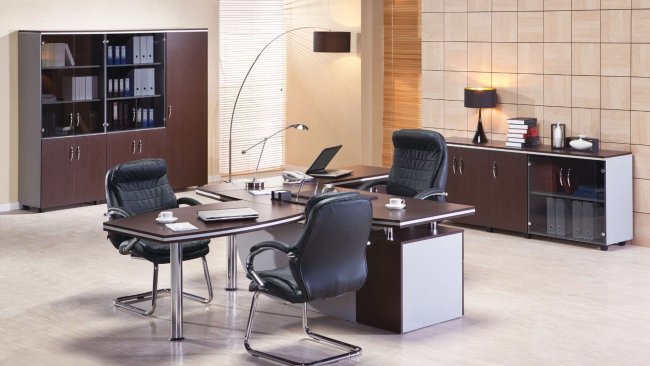
When small office spaces are used efficiently in terms of both functionality and aesthetics, they can feel more spacious and comfortable than expected. Factors such as office design and furniture selection can radically change the visual appearance of a space. Often, without the right approach to office design ideas, a space can look narrower and more cramped. However, even simple approaches such as smart lighting, a light color palette, modular furniture, and minimalist decoration can bring significant changes to these spaces. Compact office furniture and functional storage solutions, in particular, make small spaces more practical. At the same time, ergonomic office organization also has a positive effect on employee productivity. Let us look at effective methods that can be applied to make a small office space look larger.
Create an illusion of spaciousness through the interplay of color and light
One of the most effective ways to make a small office space look larger is through the right choice of colors and lighting. Light-colored wall paints, especially white, beige, light gray, and pastel colors, make the space appear brighter and airier. These colors create visual depth by making the walls seem farther away. Making maximum use of natural light is extremely important for increasing the sense of spaciousness in small spaces. Sheer curtains, less decoration in front of windows, and light-colored window frames can help achieve this.
If natural light is limited, placing a mirror can both reflect light and create depth. Mirrors make an area look twice as large, particularly when placed on the opposite wall. Artificial light distributed evenly through ceiling lights, LED strips, and wall lamps makes the space look visually larger. Cool-toned lighting that creates a daylight effect is more effective. Additional light sources, such as desk lamps and wall sconces, can provide extra comfort and a sense of spaciousness.
Decorative lighting serves both an aesthetic and a functional role. Remember that dark corners make a space look smaller, so balanced distribution of light is important. When color and light are harmonized correctly, the space will look both spacious and energetic. Thus, simplicity in an office interior, when combined with coordinated colors and lighting, can make it appear visually larger.
Prioritize modular and multifunctional furniture
One of the most practical approaches to making a small office space look larger is the use of modular and multifunctional furniture. Such furniture saves space by performing several functions at once. For example, elements such as a folding desk, a pull-out keyboard compartment, and a chair with a storage box are ideal for a small office. Wall-mounted desks and shelves both optimize the work area and free up space. This furniture is highly suitable for minimalist office design.
At the same time, light-colored furniture with slim profiles takes up less space and looks simpler. Since compact desks perform only essential functions, they do not create visual clutter. Mobile furniture, such as cabinets and chairs on casters, can be moved aside after use to free up space. Upright filing cabinets and vertical storage systems are ideal solutions for optimizing space. This furniture also creates a tidy working environment.
Keeping unnecessary items out of the office and following the principle of minimal furnishings are fundamental rules for small spaces. This reduces visual clutter and creates a more spacious appearance. Ergonomic furniture provides comfort while enabling purposeful use of space. Practicality and simplicity should be the main criteria when selecting furniture for a small office. In this way, an office environment that is both aesthetically pleasing and functional can be created.
Use an open-plan layout and transparent partitions
Open-plan design and transparent partitions play an important role among the ways to make a small office space look larger. Walls and solid dividers create an effect that makes the space feel smaller and more confined. In contrast, glass panels, low-height partitions, or open layouts without any physical dividers create a more spacious atmosphere. Open-plan offices strengthen the spirit of collaboration while also allowing freedom of movement.
With this type of planning, boundaries disappear, desks are arranged more flexibly, and visual flow is ensured. Transparent partitions maintain connections between employees without visually dividing the space. At the same time, personal space is preserved through the use of acoustic panels or sound-absorbing materials. Vertical lines can be used alongside shelving and lighting to make the ceiling appear higher. Fewer physical barriers in the space increase the sense of openness.
Centralized storage systems in open-plan offices also reduce the need for additional furniture. This means a tidier appearance and more free space. A consistent floor level and the use of glossy materials also complement open-plan design. The result is a functional office that looks spacious. This approach is also considered ideal for contemporary office design that keeps pace with the times.
Avoid additional visual decorative elements
When considering ways to make a small office space look larger, avoiding visual overload is very important. Too many paintings, clocks, sculptures, and accessories can make the space look cramped and cluttered. Instead, a simple and clean design principle should be applied. Minimalist decoration creates a greater visual sense of open space.
It is recommended to limit walls to only one or two accent details, such as a small painting. Live plants are also a good choice for the space, but hanging varieties or plants in vertical planters are more suitable. Plants create a natural appearance and help purify the air. Reducing the number of decorative elements also prevents dust accumulation. Keeping a minimum of objects on the desk creates an impression of order and spaciousness.
Arranging electronic device cables neatly prevents additional clutter. Light-colored paintings and lettering on walls are both motivational and aesthetically enriching. This preserves visual cleanliness and balance. Every detail in a small office should have a function. In other words, aesthetics and functionality should be considered together. This approach reduces eye strain and ensures that the space looks larger.
In conclusion, making a small office space look larger is a very realistic and achievable goal with the right design approach, functional furniture choices, and efficient lighting. The main consideration in this process is to use every inch of the space in a planned way and avoid excessive visual clutter. If you also want to turn your cramped office space into a more functional and comfortable working environment, you can achieve significant results by applying these simple yet effective approaches. Remember, how a space is organized matters more than its size. With smart design solutions, it is possible to achieve both aesthetic appeal and productivity in small offices. Thus, by applying the methods listed above, you too can transform your office into a more spacious, work-friendly, and modern space.