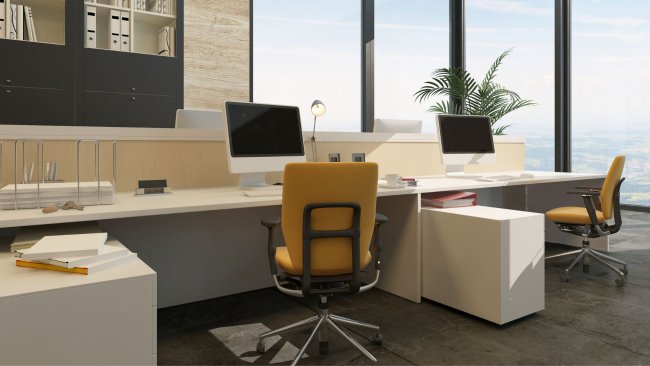
The modern business world is changing rapidly, and these changes are especially evident in offices. Remote working, which began with the pandemic, has now become a more flexible, adaptable model called the “hybrid work environment.” Some employees work in the office, while others work from home or elsewhere. This format requires different approaches from traditional office furniture. Modular office furniture comes to the forefront here. Both aesthetic and functional, these systems allow office space to be adjusted flexibly. The modular approach enables repeated redesign according to changing employee numbers, team structures, and activities. This article will discuss furniture concepts suited to hybrid work environments, their advantages, and examples of implementation in detail. Our aim is to guide you in creating high-quality office spaces both visually and functionally. Let us begin with the concept of hybrid working.
What Is a Hybrid Work Environment and Why Is It Important?
A hybrid workplace is a working model in which employees can work both in a physical office and remotely. This model has rapidly gained popularity in recent years and become the main working format for many companies. Unlike a traditional full-time office arrangement, a hybrid environment provides flexibility, balance, and higher productivity. This arrangement is closely connected not only with technological support but also with office design, employee motivation, and space optimization. Employees manage their time more efficiently, while companies can save on costs by reducing their need for office space. Opening a new era in working life, hybrid work also positively affects employee well-being and engagement. If this system is not planned properly, the office can become an inefficient, disorganized, and unmotivating space. Modular furniture systems therefore play a key role in implementing the hybrid working model correctly. They provide optimal conditions for employees and make it possible to adapt to changing work plans. Below, let us take a closer look at the main components of the hybrid workplace.
Combining traditional and remote working arrangements
The hybrid work model is a balanced combination of traditional and remote working arrangements. Under this system, employees can work in the office on some days of the week and at home or elsewhere on others. This approach gives employees greater freedom and opportunities for productivity. Combining the convenience of remote work with the social dynamics of the office environment, this model is considered ideal for meeting various needs. For managers, this arrangement also creates new opportunities to monitor employee performance and balance the distribution of work. Office planning must accommodate both arrangements optimally. This is precisely why flexible solutions such as modular office furniture are needed. The same desk can be adapted for both individual work and small meetings. In short, this working arrangement brings mutual benefits to both the business and its employees.
Impact on employee flexibility and satisfaction
A hybrid work environment allows employees to plan their working hours and location according to their needs. This improves overall well-being and motivation to work. Less fatigue and a better balance between family and personal life are key factors in satisfaction. Satisfied employees are more productive and creative. Office ergonomics also plays an important role in this model. Comfortable, adaptive furniture reduces employee stress. Both physical and psychological comfort are therefore provided. Instead of sitting at the same desk every day, employees can choose to work in different sections. This is a major advantage for office flexibility and spatial dynamism. Employees ultimately feel more valued and free.
The need to reassess office spaces
One of the biggest changes in companies adopting a hybrid model concerns the use of office space. Traditional office planning provided each employee with a fixed desk and designated space. However, under a hybrid arrangement, these areas often remain empty because some employees are not in the office on certain days. This leads to inefficient use of space and unnecessary costs. This is precisely why office space should be organized more intelligently through modular furniture design. For example, a desk can be used for both individual work and mini-meetings. Open spaces can also be divided and turned into enclosed zones when necessary. This approach offers ideal solutions from both an aesthetic and a functional perspective. Office planning and interior design now need to be more flexible, adaptable, and purposeful. The most suitable way to achieve this is to create dynamic environments that strengthen collaboration through modular office furniture.
What Is Modular Office Furniture?
Modular office furniture consists of furniture systems made up of various functional elements that can be combined with one another, rather than a single piece. Such furniture can be arranged to suit any space and requirements. Unlike traditional furniture, modular systems stand out for their adaptable and flexible structures. This makes them an ideal choice for a hybrid work environment. They make it easy to create either individual desk areas or team-based zones. Moreover, they can be quickly dismantled and reassembled when necessary. This furniture is suitable for both small offices and large corporate spaces. Functionality and versatile use are now among the main priorities in the concept of modern office interiors. For this reason, modular design plays a leading role in contemporary furniture styles. Now, let us explain the concept of modular furniture in more detail.
The concept and principles of modular design
The concept of modular design is based on the principle that different components can be freely combined and separated within a system to take on different forms. Furniture made according to this principle creates new configurations suited to various purposes by combining several simple modules. For example, two different desk modules can be joined to create a large conference table. Alternatively, seating systems can be separated to create individual lounge areas. This flexible design approach allows space to be used as efficiently as possible. Each module can be used both independently and in combination. This approach enhances office furniture design both functionally and aesthetically. Adaptability to users' needs and the ability to make quick changes play a key role in furniture selection. Systems designed according to this principle can be integrated into any working model. As a result, ideal conditions are created for both individual and group work.
Adjustability to suit different needs
One of the most important advantages of modular office furniture is its adjustability to different users and tasks. For example, a module used as a meeting table one day can become an individual desk the next. This flexible approach offers a major advantage in optimizing space and saving resources. Each furniture element can be changed and adapted to perform different functions. This reduces office monotony and allows easy adaptation to various work processes. Specific solutions can also be created for teams of different sizes and styles. Furniture that can serve as an individual desk, a platform for team collaboration, or a relaxation zone creates complete office flexibility. This helps employees feel comfortable and free.
Portability and expandable structures
Modular furniture also falls into the category of portable office furniture. It can be disassembled, transported, and reassembled in a new location at any time. This feature is particularly suitable for mobile offices, project-based teamwork, and settings that require frequent design changes. Expandable structures can be reconfigured by adding additional elements when the team grows or the space changes in the future. This furniture adapts both over time and to the possibilities of the space. Users can rearrange this furniture according to their needs and expand it with additional sections, shelves, or booths. Modular desk systems, seating units, and movable partitions are among the best examples of this feature. This flexibility makes it possible to plan office design with the future in mind.
Advantages of Modular Furniture for Hybrid Environments
The hybrid work model requires office spaces to offer greater flexibility, functionality, and opportunities for collaboration. For this reason, modular furniture systems are an ideal choice for these environments. Advantages such as flexible design, space savings, and adaptability to individual and group work are among the main distinguishing features of these systems. This furniture also makes it possible to adapt quickly to changing employee numbers and the needs of different departments. In other words, companies can continually update and develop their work environments with modular furniture. Most importantly, this furniture improves long-term cost-effectiveness and productivity. A dynamic office layout directly affects performance by increasing employee motivation. Let us take a closer look at these advantages.
Maximizing the Use of Office Space
Modular furniture systems allow every square meter of office space to be used efficiently. In traditional furniture design, areas were often left empty or used inefficiently. With a modular approach, however, each furniture element can serve various functions. For example, a seat can be used both as storage space and as a relaxation area. This is a major advantage in terms of optimizing office space. Even in small offices, multifunctional furniture makes it possible to achieve a spacious and tidy appearance. At the same time, open and divisible areas can be used for different purposes at different times. This flexibility gives companies both aesthetic and functional advantages.
Flexible planning to suit employee numbers and needs
Under a hybrid working arrangement, the number of employees coming to the office each day may vary. Sometimes the office is completely full, while at other times it remains half-empty. Modular furniture solutions are very well suited to this situation. Furniture can be joined together when needed, separated, and rearranged into new layouts. This allows office managers to plan according to employees' needs. Employees can easily change the spaces where they will work individually, in pairs, or in groups. Thus, suitable zones are created for both individual concentration and team collaboration. Flexible planning also keeps the office visually refreshed, creating a sense of freshness for employees.
Reducing manufacturing costs and repair needs
Because modular furniture consists of interchangeable parts, there is no need to replace the entire piece when any part is damaged. Simply replacing the damaged part minimizes repair costs. This means long-term cost-effectiveness for the company. At the same time, modular furniture made from durable materials requires fewer repairs. Additionally, because the furniture performs several functions, there is no need to purchase separate pieces. This makes the initial furniture investment more targeted. Since production and servicing times are also short, flexible changes can be implemented easily.
Open designs that enhance collaboration among employees
Furniture structures with open, flexible designs are important for increasing opportunities for collaboration in hybrid work environments. Modular furniture helps employees communicate more comfortably in open-plan offices and creates a collaborative working environment. Different team members can come together to combine or separate desk systems. This is a key element in strengthening team spirit. Visually open, transparent furniture forms also create a friendlier atmosphere within the office. These designs align fully with a key office trend: collaboration-oriented spaces. As a result, both social and work-related interactions increase, strengthening relationships among employees.
Integrating Modular Elements into Hybrid Office Design
To successfully establish a hybrid work environment, it is not enough for the furniture alone to be modular; integrating this furniture into an appropriate design is also important. Modular elements should take into account not only visual and functional requirements, but also employees' psychological comfort and productivity. Hybrid offices are no longer simply workplaces; they also consist of zones intended for social interaction, relaxation, and creativity. In this respect, flexible zones, individual booths, technology stations, and open collaborative areas are the main focuses of the modular approach to office design. In the following sections, we explain in greater detail how and where these elements can be used.
Suitable workstations for open-plan office systems
Open-plan office design is widely used in hybrid work environments. These designs increasingly use multidirectional workstations instead of individual desks. Modular stations allow several employees to work in the same space in different ways. They can be used flexibly for both individual work and group meetings. Movable dividers separate the space while preserving distinctions between desks and maintaining visual openness. Because employees can choose their preferred sitting angle and area, comfort increases and concentration becomes easier.
Booths with acoustic panels for working in privacy
Hybrid office design should include both open and enclosed work areas. Modular booths with acoustic panels are an ideal solution. They absorb sound and provide individual employees with a space for full concentration. Available in various sizes, these booths are intended for individual or two-person use. When not in use, they can be easily folded into a compact form. These spaces improve employee performance on tasks requiring secluded work. They are also a practical solution for maintaining social distance.
Modules for meeting and collaboration areas
Every hybrid office needs flexible zones for regular and spontaneous meetings. Modular table and seating systems can be converted into meeting zones when needed. These zones are used for both small team meetings and idea “brainstorm” sessions. Some furniture also offers technical support through integrated screens and presentation panels. This makes it easier to integrate technology in hybrid offices. Even when collaboration zones are set up in an open space, they can be separated with movable panels. This makes them adaptable for both open and enclosed uses.
Equipping the space with integrated technology
Modular furniture systems should provide not only physical comfort but also technological functionality. Next-generation furniture may include USB ports, built-in power panels, wireless charging stations, and built-in screens. These technologies make work processes more efficient and faster. Each desk or seating station serves as a small work hub with access to technology. Furniture that can connect to smart office systems creates innovative solutions that save energy and provide ease of use. This highlights the importance of technology-integrated office design in hybrid work environments.
Popular Modular Furniture Examples and Trends
The rapid evolution of modern work environments also leads to new trends in furniture design. Office furniture is now valued not just for sitting and working but also for aesthetic appearance, flexibility, comfort, and functionality. Modular furniture offers ideal solutions that meet all these requirements for companies with hybrid working arrangements. Expandable desk systems, folding seats, multifunctional partitions, and movable wall systems are leading these trends. This furniture offers not only practicality but also visual solutions that adapt to interior design. Below, we present the most widely used and popular modular furniture examples.
Single-seat and flexible desk systems
Single-seat desk systems are comfortable, flexible furniture that can be used for both individual work and relaxation. They are made in various sizes and designs to suit different types of users. One of their best features is that they can be positioned to suit any office space. These desks often consist of individual modules that can be combined into group desks. Thus, the furniture system adapts as employee numbers change. Storage compartments, technology panels, and power outlets can also be placed underneath. This makes them more functional and technologically equipped. When used with ergonomic seating, these systems increase employee productivity. Users can adjust the desk height and select their individual level of comfort.
Multifunctional shelving and partition systems
Multifunctional shelving and dividers serve as both storage and space partitions. These systems are particularly indispensable for dividing open-plan offices into functional areas. Shelves are used for documents and office supplies while also enhancing the space decoratively. In some designs, green plants or screen panels are added to these dividers, further improving the office's aesthetics. At the same time, these elements also play a role in absorbing sound and maintaining privacy. Because they are movable and adjustable, they can easily be relocated at any time. This provides flexibility in interior design.
Folding table and seating systems
Foldable furniture is an ideal choice for temporary use of space and rapid changes. Such systems can be quickly put away after meetings and events. For example, folding tables can be unfolded at any time to create a workspace or meeting area. Chairs can likewise be folded into a compact form and placed in storage. This type of furniture is mainly used in multipurpose rooms, meaning that one room can serve as a conference room, a seminar room, and a relaxation space. Their lightweight and portable nature makes them easy to move. At the same time, they contribute to flexible space design suited to hybrid working.
Movable wall systems and mobile partitions
Movable wall systems and mobile partitions hold a special place among modern office trends. They provide privacy and quiet in open areas without creating enclosed rooms. Movable walls can divide one zone into two or combine two areas at any time. They are available in various materials and colors to complement the interior aesthetically. Models with acoustic panels are considered superior for sound insulation. Mobile partitions can be used not only to divide office space but also for functional purposes, such as writing boards or presentation boards. Casters allow rapid office changes. This maximizes support for multidirectional space use in hybrid work environments.
Recommendations for Choosing the Right Modular Furniture
Although modular furniture systems offer extensive possibilities, choosing and planning them correctly is a key requirement for successful office design. Every work environment has different needs, and for this reason, not every piece of modular furniture may suit every space. When making a selection, criteria such as functionality, durability, and long-term cost-effectiveness should be considered alongside appearance. The team's work structure, daily working routine, and technological needs also play an important role in this process. By choosing the right modular furniture, it is possible to create a more balanced, effective, and modern office environment. Below, we explain the main criteria to consider during this selection process.
Compatibility with team composition and the working model
Every workplace has a different team structure and working model. Some teams prefer mostly individual work, while others require close collaboration. This structure should be considered when choosing modular furniture. For example, combinable desk systems are important for teams that meet frequently. Acoustic booths and individual stations are more appropriate for tasks requiring personal focus. In hybrid environments where flexible employees rotate, it is also very important for furniture to be quickly reconfigurable. This compatibility directly affects employee productivity and comfort.
Compatibility with room dimensions and the design plan
When buying modular furniture, decisions made without considering the office’s dimensions and layout can result in insufficient space and an inefficient arrangement. Each piece of furniture should be sized to fit the area where it will be placed. Folding and multifunctional furniture is recommended for small offices, while systems divided into large sections are recommended for spacious premises. The design plan should be optimized in terms of both aesthetics and function. Color harmony, compatibility with lighting, and ease of movement should be considered. Choosing furniture that fits the space ensures visual order and ease of use.
Durable materials and technological compatibility
The materials used to manufacture furniture determine its durability and service life. Environmentally friendly, durable materials offer advantages for both health and the environment. Compatibility with technological devices is also important. USB outlets, power panels, monitor supports, and wireless charging facilities should meet modern office requirements. This integrated technology makes employees’ work easier and creates a more flexible work environment. Such furniture also supports the company’s digital transformation.
Budget and long-term cost-effectiveness
Modular furniture can sometimes cost slightly more initially, but it is considered much more economical in the long term. It can be used for many years without frequent replacement. If damaged, replacing only one part prevents additional costs. Its flexibility also allows a company to adapt it without further investment when relocating or expanding the office. Because high-quality, functional furniture serves for a long time, it reduces overall office costs and justifies the investment.