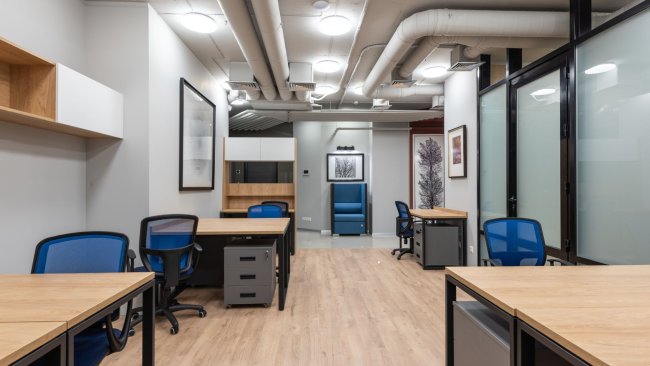
Concentration is the key to both individual and collective productivity in a modern workplace. Office design is one of the factors that directly affects attention levels. Employees’ concentration difficulties are often caused not only by workload but also by an unsuitable physical environment. Research shows that a properly designed office increases employees’ creativity and motivation. Noise frequently causes problems in open-plan offices. It distracts attention and reduces productivity. Comfortable seating and lighting, on the other hand, strengthen focus. Natural light increases the release of positive hormones in the brain, helping sustain attention. The psychological effects of colors also play a major role in employee performance. A minimalist, tidy environment protects against distractions. Smart integration of technology is important for maintaining focus in the office. Ergonomic solutions provide physical comfort and strengthen concentration. Plants and natural elements refresh the mind. Zones adapted to different working styles also maximize attention. Office design is not only about aesthetics but also about creating psychological and functional balance. Applying principles that improve focus makes the workplace more valuable and productive. Every company should therefore design its office environment strategically. Higher results can consequently be achieved at both individual and team levels.
Lighting and focus principles
Lighting is one of the most important elements of office design. An abundance of natural light improves people's attention and mood. Sunlight increases the brain's secretion of serotonin, enhancing the ability to concentrate. Alongside this, the quality of artificial lighting also plays a major role. Excessively bright lights can cause eye fatigue. Overly dim lighting, on the other hand, makes concentration difficult. A balanced lighting system is therefore essential. The color temperature of the light is also important. Cool-toned lights are suitable for tasks that require greater focus. Warm-toned lights are more effective in relaxation and creativity areas. Providing each desk with an individual lamp improves employees' attention. Shadow-free lighting at eye level reduces fatigue. Flexible lighting allows employees to adjust it to suit the conditions. In addition, adaptive lighting systems that respond to the time of day can also be implemented in the office. Lighting is therefore not merely an aesthetic element, but also a functional tool that helps maintain attention.
The role of acoustics and a quiet environment
Noise is one of the greatest enemies of focus in an office. This problem is more noticeable in open-plan offices. Conversation and phone calls distract employees, reducing work quality. Acoustic panels and sound-absorbing materials reduce sound transmission. Creating special quiet zones is also helpful. They allow employees to work with full concentration. Enclosed meeting rooms also help preserve attention. Background music sometimes improves focus, but its genre and volume must be chosen correctly. Excessive volume can have the opposite effect. Technological sound-control solutions also exist. White noise generators can neutralize distracting sounds. Headphones strengthen individual focus too. Overall, acoustics and quiet surroundings are key factors in protecting attention. Companies can make the work environment more productive by applying this principle.
The impact of ergonomics and physical comfort
Physical comfort is important for sustained attention. Ergonomic chairs protect employees’ lower-back and neck health, which is important for prolonged focus. Desk height also affects attention. Desks that are too low or too high cause discomfort. Positioning monitors at eye level is important too. Comfortable keyboard and mouse placement improves focus. Footrests reduce fatigue during prolonged sitting. Movement during breaks from seated work is also important. Office walking zones are ideal for this purpose. Proper ventilation supports physical comfort because fresh air preserves attention for longer. Temperature balance ensures employee comfort. Considering ergonomics also prevents health problems, supporting longer-term productivity. High levels of focus are not possible without physical comfort.
Colors and principles of visual simplicity
The psychological impact of colors is very important for attention in an office environment. Blue has a calming effect that improves concentration. Green increases creativity and reduces eye strain. Yellow has a motivating effect. However, very bright shades of yellow can be distracting. Red mainly creates a short-term energy boost. However, it may not be suitable for prolonged work. Minimalist design is an ideal approach to maintaining attention. An orderly visual environment helps the brain process information more easily. Cluttered decoration, on the other hand, distracts attention. Using colors that match the company logo also strengthens corporate identity. Neutral wall tones create a calm atmosphere. Keeping only a few items on desks is also important. Visual balance directs employees' attention solely toward their work. Functional decoration supports focus. Thus, colors and visual simplicity are among the key factors in maintaining attention.
The impact of natural elements and greenery
Using natural elements in office design is very useful for maintaining attention. Plants improve air quality and increase oxygen levels. This helps the brain function more efficiently. Greenery has a visually calming effect. Employees’ stress levels decrease and concentration improves. In open-plan offices, large plants can also absorb sound. Green walls or biophilic design elements enrich the office’s aesthetics as well. Using natural materials such as wood, stone, and cotton supports psychological comfort. Incorporating water features, such as small fountains, also has a calming effect. Balconies or outdoor areas help employees recharge during short breaks. The presence of natural elements also increases creativity. This encourages new ideas to emerge. A green environment protects both individual and collective attention. Companies can use this approach to create a balanced, healthy office environment. Natural elements consequently become one of the important principles that make concentration easier in the office.
Creating Flexible Work Areas
Every employee has different needs for attention. Some focus better in quiet surroundings, while others are more creative in a dynamic environment. Creating flexible office zones is therefore important. Focus zones are intended only for tasks requiring concentration. They provide minimal decoration and quietness. Collaboration zones are ideal for team discussions. Open seating makes group work easier. Relaxation zones are also important. Employees can recharge through short breaks here. Hybrid meeting rooms are convenient for both physical and virtual meetings. Flexible design allows employees to choose according to circumstances, supporting focus individually. Mobile desks and modular furniture make the environment more adaptable. Flexible work zones are therefore a key part of modern office design that protects concentration. Companies use this principle to increase productivity.
Technology and Solutions That Maintain Focus
When applied correctly, technology is a powerful tool for supporting focus. Smart control systems can automatically adjust lighting and temperature. This increases employees' comfort and attention. Digital platforms make teamwork easier. However, excessive use of technology can be distracting. Therefore, a balanced approach is important. Dedicated focus apps improve employees' time management. Managing notifications also helps maintain concentration. Headphones with noise-cancelling technology enhance individual focus. Virtual reality zones provide special opportunities for creative projects. Fast and efficient office equipment prevents distractions. Technological solutions provide a streamlined workflow in the office. This both prevents wasted time and improves focus. Overall, the balanced use of smart technology is one of the key principles that support focus. In this way, companies create an environment that is both innovative and productive.
Space planning and tidiness principles
The way space is organized in an office has a major impact on attention. An untidy environment is distracting. A neat and minimalist layout, on the other hand, improves concentration. Spacing desks apart creates a sense of personal space. This also helps maintain attention. Corridors should be kept wide to ensure a smooth workflow. Sufficient storage space ensures that the environment remains organized. Open shelves allow items to be found quickly. Proper planning of circulation areas prevents obstacles that reduce employees' focus. It is important to have separate areas for different functions. For example, dining areas should be intended only for breaks. A balanced division of space supports both individual work and teamwork. Transparent glass partitions create a bright environment, but should be complemented by acoustic solutions. Attention is easier to maintain when space planning is adapted to employees' behavioral habits. Order and structure are the main foundations of focus in the office. As a result, a well-planned office increases productivity.