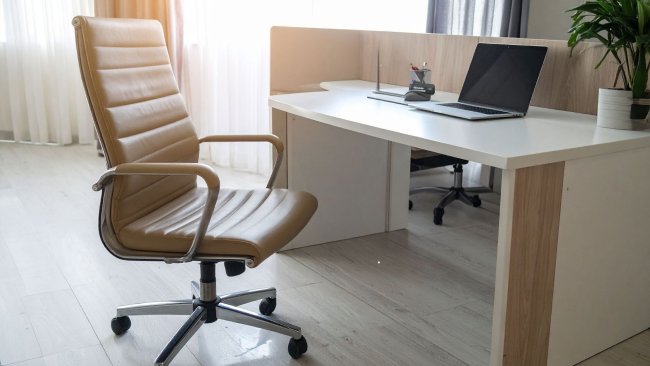
An office chair is one of the most important pieces of furniture providing everyday comfort at work. The chair in which we sit for long hours directly affects both health and productivity. Even a high-quality chair can have a shortened lifespan without correct use and maintenance. Many people regard a chair simply as a tool for sitting, but regular care is required for longevity. Otherwise, we may lose comfort and incur additional costs. Mechanisms, casters, the seat, and leather upholstery are the parts under the greatest load. Timely cleaning and proper use of these parts increase durability. An office chair’s lifespan also depends on how the user treats it. Following simple daily rules allows maximum benefit for a long time. A chair that fails quickly can also negatively affect the workplace, because an uncomfortable chair distracts attention and reduces productivity. Extending chair lifespan therefore matters for both health and budget. A long-lasting chair also benefits the environment, because frequent furniture purchases increase waste. In many cases, a properly maintained chair can be used without problems for years. Choosing care methods appropriate for the material is also important. Leather, fabric, and mesh chairs require different cleaning and maintenance. Keeping the chair in suitable conditions is another key factor extending its lifespan. In this article, we will discuss simple but effective ways to keep a chair long-lasting. With daily habits and a little care, your chair can serve you for many years.
1. Proper usage habits
The first step in extending a chair’s lifespan is using it correctly. People often use a chair as a step ladder, put their feet on it to climb up, or stand on it instead of sitting. This damages the mechanisms. It is important to remember that a chair is intended only for sitting. Applying too much force to the backrest can also loosen the frame. The chair should be used in a normal seated position so that the load is distributed evenly across the casters. Allowing children to use the chair as a plaything also leads to premature failure. In addition, continually turning the chair in the same direction can upset the balance of the mechanism. When sitting down, it is better to move the chair gently by hand rather than pull it forcefully. Keeping heavy objects on the seat is also not recommended. A proper sitting position helps reduce deformation of the chair’s materials. If the chair has adjustable parts, they should not be tightened more than necessary. Remember that daily care and attention help a chair serve for longer.
2. Regular cleaning and care
Regular cleaning is essential for an office chair to last. Dust and dirt penetrate fabric or leather upholstery, causing the material to wear out quickly. Cleaning products should be appropriate for the material. Special leather cleaners are suitable for leather chairs, while a mild soapy solution is suitable for fabric chairs. Mesh chairs can be cleaned with a vacuum cleaner and a damp cloth. Dust and hair that accumulate between the casters can make them harder to move. Checking the casters once a month is therefore useful. Metal parts should be kept dry to prevent rust. The chair’s mechanisms also require attention during cleaning, because mechanisms without lubrication may make noise and become difficult to move. Regularly lubricating them with a special lubricant is recommended. It is important to avoid harsh chemicals when cleaning. Otherwise, the material’s color fades and it quickly peels away. Regular care preserves both the chair’s appearance and comfort. As a result, the chair remains like new for a long time, both aesthetically and functionally.
3. Proper placement and storage guidelines
The environment in which a chair is placed directly affects its lifespan. Direct sunlight causes material to fade and become brittle quickly. Leather-upholstered chairs are especially sensitive. Fading is more quickly noticeable on fabric chairs. Metal parts may rust in humid rooms. Keeping chairs in dry, ventilated spaces is therefore recommended. Air temperature also affects the material. Excessive heat can reduce elasticity, while excessive cold can make material hard and prone to breaking. Keeping a chair near walls or hard objects may scratch its back. Covering an office chair when not in use is a good method. This protects against dust and accidental damage. Keeping it on a flat, level surface is also important because uneven surfaces can disrupt balance. Proper placement and storage keep a chair in good condition for many years.
4. Checking and lubricating mechanisms
Regularly checking the mechanisms is one of the main factors that extends an office chair’s lifespan. The swivel mechanism, height adjustment component, and tilt function are the most frequently used parts. These parts may loosen or stiffen over time. If the chair squeaks or feels stiff, this is a sign that it needs lubrication. Lubricating the mechanisms every 4-6 months makes the chair’s movement smooth and quiet. Special technical lubricants should be used. Using too much lubricant, however, can cause dust buildup and stickiness. When checking the mechanisms, it is also important to pay attention to tightening screws and bolts. If there is any looseness, the chair will soon start wobbling and making noise. The caster mechanism also requires special attention. After removing and cleaning the casters, applying a small amount of lubricant is useful. Checking the adjustable backrest mechanism is also important, because a problem in this part can completely compromise comfort. Neglecting the mechanisms shortens the chair’s lifespan. Conversely, regular inspection and lubrication can keep it working without problems for years.
5. The role of proper sitting posture
A chair’s longevity depends not only on its materials and mechanisms but also on the user’s sitting position. A proper sitting position helps distribute the load evenly over the seat and backrest. If you constantly sit on the edge of the chair, one side will deform faster than the other. Leaning too far back or sitting sideways weakens the frame. Keeping your feet parallel to the floor and resting your back against the backrest distributes the load evenly. In chairs with lumbar support, correct posture benefits both human health and the chair’s lifespan. Constantly rocking the chair or moving back and forth on it causes the mechanisms to loosen quickly. Even weight distribution is important when sitting. Otherwise, the seat foam and material wear out quickly. Adjusting the chair’s adjustable parts to your body dimensions also makes sitting healthier and safer for the chair. Sometimes people try to adapt the desk to the chair instead of adapting the chair to the desk. This creates an imbalance in posture. Remember that proper sitting helps the chair retain its shape for many years.
6. Precautions for long-term use
It is important to take certain precautions when using an office chair for a long time. For example, sitting in a chair for hours without a break harms not only your health but also the chair's material. Getting up every 1-2 hours and leaving the chair unoccupied helps preserve the shape of the foam padding. It is also useful to put a protective cover over the chair. This cover protects the chair from both dust and accidental spills. If liquid is spilled on the chair, it must be cleaned immediately because, once absorbed, it damages both the material and the internal foam padding. Frequently using the chair on a slippery surface is risky, so using it on a carpet is safer. Adding an extra cushion or lumbar support helps reduce deformation of the chair's own material. Ensuring that children use the chair correctly is also one of the precautions. This is because children often use the chair as a plaything. If the chair frequently needs to be moved to another room, it is better to lift it slightly rather than drag it. It is important to avoid placing very heavy loads on the chair. Although these measures may seem small, they play a major role in extending the chair's lifespan.