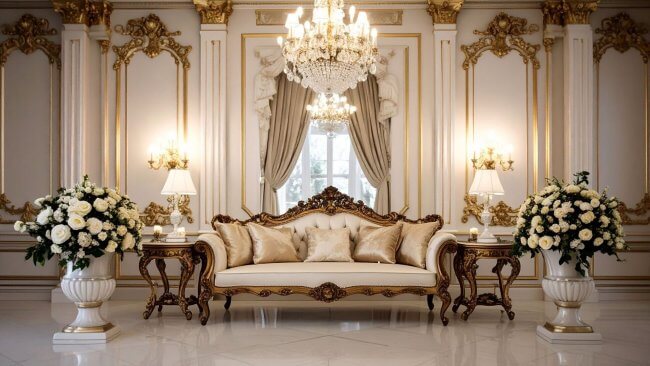
In today's competitive business environment, strengthening a company's relationship with its clients is not limited to the services and products it offers. A brand's reliability, values, and image are often reflected in the visual appearance of its office. One of the most important elements reflecting company culture is the choice of furniture. Luxury furniture is regarded not only as a source of comfort but also as a sign of prestige. For this reason, the interior details used in offices, particularly approaches to furniture, play an important role in a company's strategic image-building. When a client enters an office for the first time, the impression in their mind forms within a few seconds. This impression often stems from the comfort of the seating, the design of the desks, and the aesthetic harmony of the overall space. Company executives have begun to understand that employee motivation and productivity are also closely connected to precisely these details. Luxury furniture means not just design but also quality and longevity. Modern approaches show that furniture concepts that are minimalist, functional, and at the same time highly aesthetic reflect a company's value system. This approach is a sign of respect for both clients and employees. As a result, a brand is remembered not only for its product but also for the environment it creates. Particularly for companies operating in the global market, the interior concept has become an important part of building an international image. A brand's premium status can be easily discerned from its luxury furniture and interior details. For this reason, every business should regard its office not simply as a working environment but also as a visual business card. In fact, an approach centered on luxury furniture demonstrates a company's vision for the future, stability, and trustworthiness. Thus, furniture selection should be considered an important part of business strategy.
The impact of luxury furniture on company image
At first glance, luxury furniture may seem to offer only aesthetic comfort, but its effect on a company’s image is profound. This kind of furniture brings modernity, professionalism, and stability to the workplace. Customers and partners visiting the company’s office see refined taste and attention to detail. This increases their sense of reliability and trust. Luxury furniture also visually embodies the brand’s values. For example, innovative companies tend to prefer furniture with modern, minimalist designs. Those choosing a traditional, classic approach favor models rich in wood and handcrafted details. In either case, the chosen furniture style communicates the company’s positioning to its audience. In addition, employees work more comfortably and with greater motivation when they are provided with high-quality furniture. A comfortable workplace directly affects productivity. At the same time, this approach demonstrates the value the company places on its employees. Luxury furniture turns the company from merely a workplace into a creative, inspiring space. All of this helps shape the brand’s long-term image.
Interior details that shape customer impressions
When a customer enters an office, interior elements are the first things to attract their attention. Color coordination, lighting, and furniture choices determine the customer’s emotional response. Luxury furniture plays a special role in this process because it provides both comfort and aesthetic value. High-quality leather chairs and functional desks communicate professionalism to the customer. Materials used in furniture details, such as natural wood, metal, and glass, add refinement to the image. The customer comes not only to receive a service but also to experience value. This approach shows the customer that the company values long-term relationships as well as short-term profit. Luxury furniture in the interior also stands out through subtle details. Small but striking elements, such as specially designed desk lamps or a balanced color scheme, influence the customer’s subconscious. A positive first impression of the company is therefore formed. Sometimes the interior can even influence the customer’s decision before the quality of the service does. Choosing luxury furniture is consequently not merely an aesthetic matter but a strategic step. It is an important means of strengthening the company’s position in the market.
Furniture approaches that increase employee motivation
The effect of office furniture on employees' psychology and motivation is undeniable. Comfortable armchairs, functional desks, and ergonomic chairs also support employees' health. Luxury furniture stands out not only for its appearance but also for its comfort in use. Employees working in such an environment feel more valued. This directly affects productivity. High-quality interior elements give employees an incentive to remain with the company over the long term. Motivation increases not only through financial rewards but also through the work environment that is created. Employees are more creative when they enjoy spending time in the office. This also has a positive effect on the quality of projects. At the same time, a company that invests in employees' comfort is also paying attention to their psychological well-being. An office equipped with ergonomic furniture prevents health problems. This reduces absences due to illness. Employee satisfaction, in turn, has a positive effect on the company's overall image. As a result, approaches that incorporate luxury furniture strengthen not only the external image but also the internal corporate culture.
The long-term investment value of luxury furniture
Luxury furniture is a worthwhile investment not only for today but also for the future. Furniture made from high-quality materials retains its durability for years. This prevents companies from incurring repeated furniture costs. Long-lasting furniture also positively affects financial management. For example, luxury models used for a long time are more economical than cheap furniture that quickly fails. This approach also aligns with the company’s principle of responsible consumption. Environmentally, durable furniture choices help reduce waste. Luxury furniture therefore creates environmental value as well as an image. Customers and partners value this factor highly. Another advantage of luxury furniture is that it retains its value in the secondhand market. Quality furniture does not lose its value even when offered for sale years later. This represents an additional economic advantage for the company. Investment value is not measured only in money; it also strengthens the company’s reliability. An office equipped with high-quality furniture appears to customers as an indication of long-term plans. This is a strong message about the company’s stability.
Design elements that enhance brand distinctiveness
In a highly competitive market, design factors become important in helping a brand stand out. Luxury furniture is one of the main tools in this process. Specially designed desks and chairs reveal the company’s distinctive visual identity. This approach positions the company apart from its competitors. A brand is remembered not only for its product but also for the environment it creates. For example, an innovative company can distinguish itself with unconventionally shaped desks. Classic, traditional companies can emphasize brand differentiation with hand-carved details. Distinctive design approaches leave a lasting impression on the customer’s memory. This also helps the brand build an emotional connection. The aesthetic advantages of luxury furniture complement the company’s visual communication strategy. When interior design elements are coordinated with advertising materials, the impact becomes stronger. Furniture selection should therefore be regarded not only as a matter of the internal environment but also as part of brand strategy. The attention shown to customers and the sense of distinctiveness increase brand loyalty. This is one of the main conditions for long-term business success.
Luxury furniture integrated with modern technology
In an era of rapid technological development, approaches to furniture are also being enriched with modern solutions. Luxury furniture now offers technological functionality as well as aesthetics. For example, electrically operated desks or smart chairs increase employee comfort. Such furniture brings dynamism to the office. Furniture integrated with technology is also an indicator of a modern brand image. Customers see these details as evidence of the company’s innovative approach. Even interactive tables and screens installed in meeting rooms demonstrate that the brand embraces technology. This shows that the company has a future-oriented strategy. Technological furniture also increases employee productivity. For example, automatically height-adjustable desks offer significant health advantages. This approach helps employees remain motivated for longer. At the same time, energy-efficient technologies communicate environmental responsibility. The combination of luxury furniture and technology is a powerful visual message reflecting the company’s modern values. This increases both customer and employee loyalty to the company.