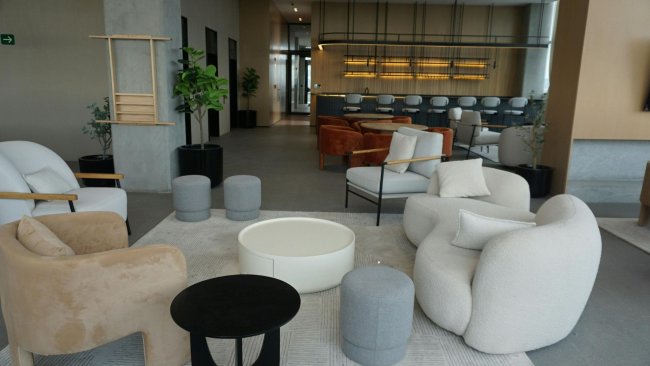
Productivity in a modern workplace is not measured only by hours spent at a desk. Dedicated spaces for rest and comfort also significantly affect employees’ overall performance. Office relaxation areas are not merely places to spend free time; they play an important role in strengthening creativity, motivation, and team spirit. Many companies now understand that employees’ psychological well-being, as well as physical well-being, is a key factor in productivity. Comfortable seating, game tables, book corners, and calming interior elements let employees step away from stress. Short breaks spent in these areas refresh the brain and restore attention. Scientific research shows that breaks are necessary to maintain sustained attention. By planning relaxation areas strategically, companies can therefore bring out employees’ maximum potential. These spaces also support the development of relationships within the office. When people communicate away from their desks in a more informal setting, they get to know each other better. This strengthens a collaborative culture and reduces conflict. Relaxation areas also become an integral part of company culture. They demonstrate the importance employers place on employee well-being. Employees consequently become more loyal and motivated to collaborate over the long term. Relaxation areas also encourage new ideas. Informal conversations in a comfortable atmosphere often become the starting point for new projects. Their effect on productivity is therefore multifaceted and not limited to brief rest. In this article, we will explore five main aspects of the effect of office relaxation areas on productivity in detail.
1. Increased attention and concentration
When employees work for long periods without breaks, the brain becomes tired and attention decreases. Relaxation areas create an ideal environment for short breaks and help refresh the brain. Brief rest allows both renewed concentration and productive decision-making. Research shows that the performance of employees who do not take breaks declines rapidly. Conversely, a few minutes of relaxation strengthens attention and memory. Quiet music, soft lighting, and comfortable design in relaxation areas support this process. These areas are not merely places to relax but also a natural means of restoring mental resources. For example, spaces called "relax room" are already considered a standard approach in international companies. This helps employees concentrate and reduce the number of mistakes. Such spaces also minimize distractions. When concentration improves, projects are completed on time and to a higher standard. Relaxation areas are therefore considered not only a source of comfort but also a strategic productivity tool. Restoring attention in a long-term working environment should be a priority for every organization.
2. Stress reduction and psychological health
Stress is an integral part of modern office life, and failing to manage it seriously harms productivity. Relaxation areas give employees a specific opportunity to step away from stress. In these spaces, employees escape everyday pressure, even if only briefly. Comfortable seating, calm colors, and natural lighting provide psychological relaxation. Research shows that these areas play an important role in maintaining employees’ emotional balance. When stress levels fall, motivation increases. Employees who are psychologically comfortable are more creative and proactive. Providing opportunities for meditation, breathing exercises, and brief physical activity in relaxation areas strengthens this effect further. Companies also demonstrate the importance they place on employee well-being. Protecting psychological well-being leads to lower employee turnover, because people want to remain longer in an environment where they feel valued. A stress-free environment also enables employees to make more balanced decisions. Both individual and team productivity increase as a result. Relaxation areas are therefore considered a strategic investment.
3. Strengthening team communication and collaboration
Employees communicate more openly with one another not only at their desks, but also in informal spaces. Break areas are among the most suitable places for developing this communication. In such spaces, employees can share their ideas in a relaxed environment and give new projects momentum. Unlike formal meetings, informal conversations produce more creative results. When people feel more comfortable, they express their opinions more openly. This increases trust within the team. Break areas also help strengthen connections between different departments. As a result, collaboration becomes stronger not only within a single group, but across the entire company. Strengthening team spirit prevents conflicts. This is because people act more understandingly when they know one another on a personal level. In addition, break areas make it easier for new employees to integrate into the team. In this environment, they establish communication more quickly and feel comfortable. This shortens the adjustment period and increases productivity. Stronger team collaboration lays the foundation for the successful execution of long-term projects. Thus, break areas make a significant contribution not only to individual productivity, but also to collective productivity.
4. Increased creativity and innovation
Creativity often develops in a relaxed and comfortable environment. Relaxation areas provide exactly this kind of atmosphere. Here, employees can step away from formal rules and think more freely. Relaxed conversations and informal brainstorming sessions lead to new ideas. Many successful startups and projects have had their foundations laid in such environments. Decorations, colors, and design elements in relaxation areas also stimulate creativity. Colorful and innovative interiors open up employees' thinking. In addition, various game elements strengthen a creative approach. This is because play activates different areas of the brain and helps people find innovative solutions. Discussions held in a relaxed atmosphere are more open and sincere. This allows employees to share their ideas without hesitation. By stimulating creativity through this kind of environment, companies increase their competitiveness. Innovation, in turn, is the main requirement for standing out in the market. Therefore, the effect of relaxation areas on creative thinking is undeniable. As creativity increases, productivity also rises. This is the key to long-term success for every organization.
5. Employee satisfaction and motivation
Employees are more productive in an environment where they feel valued. Relaxation areas demonstrate precisely this value. When a company creates such spaces with its employees' well-being in mind, it increases their motivation. People want to work harder and remain committed to the company. Employee satisfaction is directly linked to productivity. Satisfied employees take less sick leave and stay with the company longer. This also reduces the company's employee turnover. Relaxation areas also help employees enjoy their daily work. They see the office not simply as a workplace but as a space for comfort and growth. This has a positive effect on company culture. In addition, motivated employees show more initiative. They actively participate in projects and suggest new ideas. In such an environment, productivity increases at both the individual and team levels. Employee motivation directly affects a company's competitiveness. Ultimately, relaxation areas are not simply about comfort; they are also a strategic motivational tool. This is one of the key conditions for long-term development.