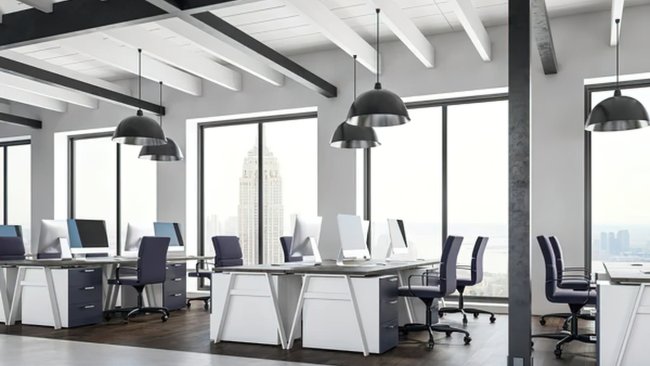
For growing companies, office furniture planning is not simply about choosing desks and chairs; it is about strategically establishing a long-term working environment. As a company expands, its team grows, departments multiply, and office space requirements change. Businesses that are not prepared for these changes often face cramped, disorganized office conditions that reduce productivity. Properly planned office furniture supports both employee comfort and the company's daily workflow. When choosing furniture, it is important to consider not only today's needs but also potential expansion over the coming years. Flexible, functional, and durable furniture solutions offer greater advantages for growing companies. This approach makes it easier to integrate new employees into the office. At the same time, it allows new workstations to be created without disrupting the existing team's working conditions. When office furniture planning is carried out correctly, space is used as efficiently as possible. This has a positive impact on both rental costs and the overall operating budget. Comfortable desks, ergonomic seating, and properly positioned storage systems improve employees' daily performance. Creating a balance between open-plan offices, individual work zones, and meeting rooms is also a key part of planning. Since every company grows at a different pace, a standard approach to furniture does not always produce suitable results. Office furniture selection should therefore be adapted to the company's field of activity, team structure, and internal culture. Teams working in technology, finance, sales, and creative fields have different office needs. Furniture planning should consider aesthetic appearance and practical use together. Furniture that looks attractive but is not functional can create additional costs and inconvenience over time. Conversely, correctly selected furniture increases employee motivation and strengthens the office's professional image. For growing companies, the main objective is to create a working environment that can adapt to changing needs. This blog explains the main principles of office furniture planning, selection criteria, and practical approaches for expanding teams.
Identifying needs correctly when planning office furniture
Analysis of team structure
The first stage of office furniture planning is understanding the company’s current working model. Each department’s daily activities, equipment, and forms of communication should be evaluated separately. The sales team may need a space more open to communication. Departments requiring concentration, such as finance and law, may prefer quieter, individual zones. If these differences are ignored, office furniture may suit the overall appearance but fail to support actual work processes. Growing companies should also estimate how team numbers will change in the coming months and years. Additional desks, storage compartments, and seating for new employees should be planned in advance. This approach reduces the need to completely redesign the office in the future.
Space allocation aligned with workflow
Office furniture placement should be aligned with workflow. Teams that frequently work together should be physically close to one another. Easy passage between meeting rooms, relaxation zones, and individual work areas should be provided. Tightly packed desks restrict employee movement and reduce overall comfort. Leaving too much space empty means using office resources inefficiently. Balanced planning is therefore a key priority for growing companies. Proper needs analysis makes all subsequent furniture choices more purposeful and efficient.
Ergonomic furniture selection and employee comfort
Creating a healthy work environment
For growing companies, choosing ergonomic furniture is particularly important for protecting employee health. Correct seat and desk height are fundamental to comfort for employees who work at desks for long hours. Ergonomic chairs help reduce strain in the lower back, neck, and shoulders. Adjustable seating is more suitable for employees with different body types. Desk height, monitor distance, and leg positioning also affect overall work comfort. Uncomfortable furniture can quickly result in fatigue, reduced attention, and lower productivity. It is therefore wrong to view office furniture only as decoration. Furniture should be evaluated as a work tool that directly affects employees’ everyday performance.
Comfort factors that influence productivity
An ergonomic work environment also strengthens employees' motivation and commitment to the company. People can stay focused longer in a space where they feel comfortable. This factor is particularly important for growing teams, because the adaptation of new employees also depends on office comfort. A furniture system featuring quality chairs and spacious desks, coordinated with proper lighting, creates a healthier atmosphere. At the same time, adjustable desks that allow people to work standing up are increasingly used in modern offices. Such solutions give employees the opportunity to vary their movement patterns throughout the day. Investment in ergonomic furniture builds a healthier, more productive, and more satisfied team in the long term.
Flexible and modular furniture solutions that accommodate expansion
Advantages of modular systems
Modular systems are one of the most suitable office furniture solutions for growing companies. Modular desks, shelves, and partitions can easily be expanded or rearranged when needed. This feature provides a major advantage for rapidly expanding teams. When a company hires a new employee, it can set up an additional workstation without completely changing the existing office layout. Fixed and heavy furniture systems, on the other hand, make the process of change more difficult and expensive. Flexible furniture solutions allow the office to serve different functions at different stages. For example, an area can initially be used as an individual work zone and later as a team desk. This kind of adaptability helps manage office space more intelligently.
Budget and long-term use
Modular furniture can also be a more budget-efficient choice. Instead of changing the entire office at once, a company can add new pieces as needed. This approach is particularly useful for businesses whose growth rate has not yet fully stabilized. Furniture made from durable materials remains usable for a long time and reduces the need for frequent renewal. When choosing furniture, consider not only its initial price but also its service life and technical durability. Cheap furniture that quickly fails can increase long-term costs. High-quality, flexible furniture creates a work environment that develops in line with the company’s growth.
Brand identity and a professional appearance in office design
A visual language aligned with the brand
When office furniture planning is aligned with the company's brand identity, the space looks more professional and memorable. Color choices, material textures, and furniture style can reflect the company's position in the market. Minimalist design can create a modern appearance for technology and consulting companies. Warmer materials and softer colors can create a comfortable atmosphere for creative teams. A visual impression of the company is formed the moment clients and partners enter the office. This impression is directly related to the reception area, meeting rooms, and overall furniture arrangement. A professional-looking office strengthens the company's credibility and organizational culture. This is particularly important for growing companies, as their image attracts more attention during expansion.
The balance between functionality and aesthetics
Aesthetic appearance should be considered together with functionality. Furniture that looks beautiful but is uncomfortable to use can create problems in everyday work. Likewise, furniture that is purely practical but visually weak can undermine the company’s professional presentation. A balance should therefore be maintained between design and ease of use. Comfortable seating, a large table surface, and furniture suited to technological equipment are important in meeting rooms. Reception areas should provide both comfort and design elements that express the brand’s character. Well-planned office furniture becomes a strategic investment that strengthens both the company’s internal culture and external image.